
|
|
#122
 04-13-2007, 09:24 PM
|
|||
|
|||
 Re: Two points against Intellectual property laws
[ QUOTE ]
You might as well attribute it to the decline in Caribbean pirates. The vast majority of innovations in history would have occured in the last X years with or without patents, because innovations build upon each other over time. The same statement was true before the advent of patents, quite obviously. The vast majority of innovations will always have occured in the last X years. Duh. [/ QUOTE ] the point is that patent doesn't seem to have hindered the exponential growth in technology. Its not a question of "oh, the last 100 years we have had more inventions than the 100-200 years ago." Its that there has been a crazy explosion of technology. obv that has to do with certain breakthroughs, but its hard to argue that we have been living in an age of stifled technological innovation. also, i think you are blatantly ignoring the dark periods in history. history hasnt been just an ever increasing slope of technological innovations, and the relatively minimal economic resources that went into a lot of those inventions make them difficult to compare to todays inventions. [ QUOTE ] Guess what. If the FDA isn't around to make you jump through hundred million dollar hoops for 15 years to get a drug to market, it doesn't cost that much or take that long. In fact it would almost certainly be a tiny fraction of the cost. You are ignoring other business models that could work perfectly well in the absence of patent protection, like privately funded charitable research, either because you personally cannot think of any (argumentum ad ignorantium), or because you simply don't want to concede that you might be wrong. [/ QUOTE ] ok, enlighten me plz. my problem with the arguments here is that they are just one liners, like "no, im not concerned about that, been inventing for years, patent obv wrong." I am not a fan of monopolies, and if other legal models worked I'd be happy to hear it. But I think the incentive argument justifies it in the case of patent. sooooo saying my argument is flawed while not really providing an explanation of an alternative really gets us nowhere, even if you can cite a latin phrase. and while the fda might not be perfect, im sure its there for a good reason. there have been some terrible consequences of drug defects. so im happy with them jumping through hoops 
|
|
#123
04-13-2007, 09:35 PM
|
|||
|
|||
|
Re: Two points against Intellectual property laws
[ QUOTE ]
This raises another point about why such research is so expensive. Government interference certainly has something to do with that. And I thought we were talking about how the small inventor would get squeezed out? Where'd these millions come from? Finally, it may not pay for another company to release the exact same drug as the one you invented. Companies like to differentiate their products. But if they do, then we have competition and the better producer will win. That's a good thing. [/ QUOTE ] We are talking about both small inventor and big inventor. Well, it might pay for a company to release the same drug drug if he can produce it as a lower price by freeriding on their R&D. [ QUOTE ] It may shock you to learn that some people invent things as a hobby and some people invent things to help them do something better. It may even be someone's job to invent something (R&D researcher). [/ QUOTE ] yes, ive heard of the phenomenon of hobby inventors. maybe thats a windfall of the system, maybe not. Patent certainly rewards those people well. And crazy, while it may be someone's job to invent something, they may not have that job without the patent system. again, company investing in r&d may be contingent upon patent protection. [ QUOTE ] You'll find a lot of ideas for "my" system haven't been tried to their full extent. This has little bearing on whether patents are justified. [/ QUOTE ] you are right
|
|
#124
04-13-2007, 09:37 PM
|
|||
|
|||
|
Re: Two points against Intellectual property laws
[ QUOTE ]
[ QUOTE ] You might as well attribute it to the decline in Caribbean pirates. The vast majority of innovations in history would have occured in the last X years with or without patents, because innovations build upon each other over time. The same statement was true before the advent of patents, quite obviously. The vast majority of innovations will always have occured in the last X years. Duh. [/ QUOTE ] the point is that patent doesn't seem to have hindered the exponential growth in technology. Its not a question of "oh, the last 100 years we have had more inventions than the 100-200 years ago." Its that there has been a crazy explosion of technology. obv that has to do with certain breakthroughs, but its hard to argue that we have been living in an age of stifled technological innovation. [/ QUOTE ] How can you possibly say this? Where is your control? [ QUOTE ] also, i think you are blatantly ignoring the dark periods in history. history hasnt been just an ever increasing slope of technological innovations, and the relatively minimal economic resources that went into a lot of those inventions make them difficult to compare to todays inventions. [/ QUOTE ] And the absence of a modern world in the absence of patent protections makes it impossible to attribute the current technological state of the world to patents. See? [ QUOTE ] [ QUOTE ] Guess what. If the FDA isn't around to make you jump through hundred million dollar hoops for 15 years to get a drug to market, it doesn't cost that much or take that long. In fact it would almost certainly be a tiny fraction of the cost. You are ignoring other business models that could work perfectly well in the absence of patent protection, like privately funded charitable research, either because you personally cannot think of any (argumentum ad ignorantium), or because you simply don't want to concede that you might be wrong. [/ QUOTE ] ok, enlighten me plz. my problem with the arguments here is that they are just one liners, like "no, im not concerned about that, been inventing for years, patent obv wrong." I am not a fan of monopolies, and if other legal models worked I'd be happy to hear it. But I think the incentive argument justifies it in the case of patent. sooooo saying my argument is flawed while not really providing an explanation of an alternative really gets us nowhere, even if you can cite a latin phrase. [/ QUOTE ] Explanations of the alternative are all throughout the thread, along with arguments that make the point that even if you concede that the absolute rate of innovation would be lower in the absence of patents that still does not justify them. [ QUOTE ] and while the fda might not be perfect, im sure its there for a good reason. [/ QUOTE ] Lol. The credulity you grant to the state amazes me. "While the National Helium Reserve might not be perfect, I'm sure it's there for a good reason." "While the Gestapo might not be perfect, I'm sure it's there for a good reason." The FDA is there for a good reason; to employ a lot of bureaucrats and increase the power of politicians. [ QUOTE ] there have been some terrible consequences of drug defects. so im happy with them jumping through hoops [/ QUOTE ] The hoops kill far, far, far more people than the defects. The market provides powerful incentives for companies to produce safe drugs and strong measures to recompense those that are damaged by negligence. Ridiculous hoop jumping is totally unnecessary. It's not just counterproductive, it is literally lethal to tens of thousands of people every year.
|
|
#125
04-13-2007, 09:45 PM
|
|||
|
|||
|
Re: Two points against Intellectual property laws
[ QUOTE ]
That the granting of a monopoly can somehow spur innovation has got to be one of the craziest economic myths ever perpetuated: 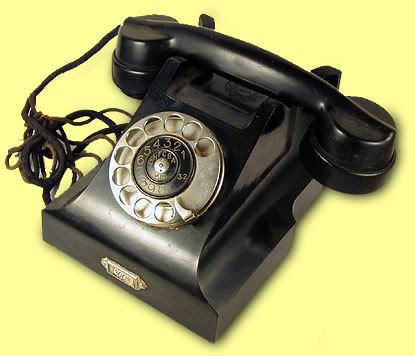 [/ QUOTE ] Yes your right, Bell was undercut by an existing company since he didn't have a patent. Which explains why even though he got his "temporary monopoly" (an oxymoron) No where anywhere is there a company called Bell in the telecom industry. From wiki: "Credit for inventing the electric telephone remains in dispute. Antonio Meucci, Johann Philipp Reis, Alexander Graham Bell and Elisha Gray, amongst others, have all been credited with the invention. The very early history of the telephone is a confusing morass of claim and counterclaim, which was not clarified by the huge mass of lawsuits which hoped to resolve the patent claims of individuals. The Bell and Edison patents, however were forensically victorious and commercially decisive."
|
|
#126
04-13-2007, 10:01 PM
|
|||
|
|||
|
Re: Two points against Intellectual property laws
Intellectual property laws are in complete disharmony with capitalism. Capitalism functions on the basis that competition drives innovation. A patent is a legal umbrella from competition.
|
|
#127
04-13-2007, 10:03 PM
|
|||
|
|||
|
Re: Two points against Intellectual property laws
I apologize, I thought you were implying that IP and AC were incompatable.
[ QUOTE ] Patents also act to destroy real property rights. If you claim that I cannot use my materials to build a wagon because you "own" the "idea" of the wagon wheel, you have obviously reduced my rights in my own physical property. Destroying rights in tangible property in deference to rights in some completely itagible concept seems incredibly dangerous to me. [/ QUOTE ] I agree, life is filled with peril. [ QUOTE ] How is this not exactly the problem that I stated? [img]/images/graemlins/confused.gif[/img] You "owning" the idea of the wagon wheel diminishes my rights in my own physical property. Including the right to build what I want with it and sell it to someone else. [/ QUOTE ] I don’t own the idea of the wagon wheel, I earned the right to exploit it commercially by coming up with it first. A patent doesn’t automagically bar competition in Stateland. In ACland A patent WILL NOT protect an inventor who isn’t doing anything with his invention. The same way a homesteader owns land because he got there first, a patent shows who thought it first. In ACland A patent holder should have to show that s/he is making an attempt at commercial use or licensing. The same way a homesteader must mix his labor with his land. There is a demand for wagon wheels, I invent them, but any Og can infringe my rights because of need? Sound familiar? [ QUOTE ] Which obviusly reduces your rights in your own physical property. [/ QUOTE ] If I’m on your physical property, can you do anything you want to me (assault, rape, robbery)? Doesn’t that infringe on someone’s “rights”? You can’t have rights without infringing on someone somehow, the best you can do is come up with an arbitrary rule that applies to everyone, including equal access to the means of enforcement. What do you tell the fourth or fortieth generation after AC is established: “I know all the fertile land is taken, should have been born earlier, sucks to be you! I guess you could invent something to make a living, oops it really sucks to be you!. Get a job HYACHACHACHA!” [ QUOTE ] You find it paradoxical that people granted monopolies will seek to exploit them and devote resources to their protection rather than devote those resources to competition? You're joking, right? [/ QUOTE ] No, I find it paradoxical that someone with the incentive to produce will simply apply for a patent, and wave it about saying “neener, neener, neener”. No IP will certainly not stop innovation (by companies in business). No IP removes the incentive for start-ups to innovate. At the same time I agree that large corporations may use patents anti-competitively, but large corporations aren’t born large. In AC corporations aren’t entities, so they can’t rest on their laurels with something they can’t own. Why would anyone labor on his own to come up with anything if anyone else can exploit it commercially? Why would the owner of a company pay someone to invent something that he intends to do nothing with? Even if a patent owner does choose rest on his laurels so what? They’re temporary. In ACland, can you make a corn farmer plant wheat? Can you make the wheat farmer sell it? [ QUOTE ] All you've done is point out that there are competing incentives, which I have already stated. And yu cannot claim that the incentives that point in one direction will be stronger than the incentives that point in the other direction a priori, because they are entirely culturally dependent. [/ QUOTE ] You can and I can’t: [ QUOTE ] The problem with patents is that the idea leads to ridiculous scenarios where nothing is done. [/ QUOTE ] Link that shows how this isn’t culturally dependant please… In ACland the greedy, capitalist, competitive culture is overflowing with wealthy guys going around buying up patents from inventors just so he can prevent any and all new comers from making money and incidentally, not making any money himself, and of course there are plenty of lazy, not greedy, not competitive, brilliant/lucky inventors who go through the trouble of getting a patent to make that quick pay day? Again so what? [ QUOTE ] What are you talking about? [img]/images/graemlins/confused.gif[/img] Who said you can't own something you create? All I'm saying is that ideas are not scarce (in the economic sense); if someone "steals" your idea, you still have it, unlike any other kind of property. [ QUOTE ] Patent protection is not a shield it's a sword. It gives the small, new guy a weapon to protect his ability to become a competitor from the big established companies. [/ QUOTE ] In other words, it is state-sanctioned violence, it is a monopoly granted by the state that must be enforced by violence or threat of violence to prevent other people from doing with their physical property what they wish. It is a taking of some portion of the bundle of rights inherent in their physical property in deference to your "right" in some intangible concept. [/ QUOTE ] So If I invent a USB drive, any and all chip manufacturers are free to produce and sell as many as they want, because I still invented it? Where do you sell glory in ACland? Without IP protection there won’t be any competition. It doesn’t have to be state sanctioned any more than the intangible concept of owning property. Their physical property isn’t an intangible concept? At least in Stateland it’s mine if I pay my taxes. My understanding of AC is that it isn’t perfect. What do you suggest inventors do in order to compete with established companies? What’s the difference between state sanctioned violence and market sanctioned violence? [ QUOTE ] [ QUOTE ] In the modern world, patent protection may seem to restrict competition because high technology patents generally require resources for development only available at large companies, but there are still many opportunities available for "backyard inventors." I'm pretty sure Tesla didn't invent the AC generator to simply to watch Edison or Westinghouse make millions for his troubles. [/ QUOTE ] Who cares? [/ QUOTE ] Tesla. Me. [ QUOTE ] This is totally contrary to your previous arguments. Patent is a *monopoly*; it *excludes* competition. [/ QUOTE ] The key word here is new. You think Intel is happy to see Joe Schmo design a better chip? Without IP anyone who has market share keeps market share; no competition. Intel: "New chip design? No problem start manufacturing them, send Mr. Schmo a Hallmark HYACHACHACHACHA". [ QUOTE ] Throughout history people have innovated without the crutch of patent protection AND managed to get compensated for their work. [/ QUOTE ] Hate to be him Cliff notes: 1967 Invented intermittent wipers. Took them to Ford. Ford told him to leave the room. Ford invites him back in. Ford tells him they’re not interested. He leaves. 1969 Ford starts manufacturing his wipers. Other companies follow suit. He looses his mind trying to sue them and 25 other companies. 1990-1991 courts awarded 10 million from Ford and Crysler. 2005 he dies. Wiki Passenger Vehicles in the United States According to my math: from 1969-1989 (20 years patent protection (25 years IMO for ACland or one generation if life spans/birth rates change)) 194 million vehicles were sold in the U.S. alone. That amounts to $0.10 a vehicle 25 years later. How this man was not robbed!. No new company no new employees no new market, but he sure still had his idea. Doesn’t seem to work well with Patent protection. You can’t tell me this isn’t discouraging competition. Without patents, AC will eventually reduce into 10-20 large manufacturers, and a permanent class of employees. That is not a free market (and worse than we have now). IP doesn’t help innovation, it helps competition. It helps new un-established companies compete. [ QUOTE ] [ QUOTE ] The idea that I don’t have to pay for Windows XP because my free copy doesn’t take away Microsoft’s copy is pretty farcical to me. [/ QUOTE ] So what? Convince everyone else you are right and copyright protection would certainly exist in the free market. But don't pretend that you having rights in intangible concepts that supercede the rights of every owner of physical property in the world is something that should be beyond dispute, because it isn't. As I have stated before, in my opinion copyrights would probably exist in a free market, but patents probably would not. [/ QUOTE ] I’m trying to convince you, high priest, I’m just an acolyte. I can’t pretend to own the products of my own mind, but we all can pretend land can be owned, as long as we all agree. No wonder AC is unpopular. IMO it’s the other way around. Patents which expire and only protect commercial exploitation should exist. Copyrights (70 years + the life of the copyrighter) should not. How is it that Stephen Kings fiction is protected (his entire freaking life+!) but Joe Schmo USB drive is not? [ QUOTE ] [ QUOTE ] IP is broken in our current system; AC without IP is enough to make me a statist (not really I’m still all for individual sovereignty. I never did like the term “anarcho-capitalist” anyway). [/ QUOTE ] This doesn't even make sense. "AC without IP is enough to make you a statist"? What does that even mean? If you think the market wants IP, then there will be IP. Beyond that, you would really prefer that there exists a monopolist of violence so that you personally could use violence and the threat of violence against people so that they don't use their physical property to implement "your" idea? You invent the wagon wheel, you spot Og making and selling wagons, and you're going to go beat him up or kill him to "protect" your idea? Talk about farcical. [/ QUOTE ] I wasn’t serious (hyperbole). The market will be very small without patents. I’m going to sue Og at my PPTO (Private Patent and Trademark Office) for damages amounting to the highest paid licensee I currently contract (If I don’t have any or don’t manufacture any wagon wheel no Judge/Jury should decide against Og.) for each wheel he sold, and destroy his credit! What are you going to do to Og when he walks by an (your) apple tree and eats an apple? Tell him it’s yours because you planted it? How did he get it then? Don’t you realize that apples can grow without your labor (not economically scarce much)? What about the labor he used to pick it? He coulda/woulda/shoulda planted an apple tree. How is this any less arbitrary than idea ownership? Does gravity suspend when you fall off a ladder since it doesn’t own your body? How about fire, lightning, or floods? Hungry bears? All human rights are arbitrary. I’m an inventor so I guess I’m biased; I’ll be applying for my first patent this (hopefully) summer. At least musicians can make a living with live performances, without IP inventors are screwed (in some cases with IP).
|
|
#128
04-13-2007, 10:25 PM
|
|||
|
|||
|
Re: Two points against Intellectual property laws
[ QUOTE ]
Intellectual property laws are in complete disharmony with capitalism. Capitalism functions on the basis that competition drives innovation. A patent is a legal umbrella from competition. [/ QUOTE ] Yes Antonio Meucci, Johann Philipp Reis, Alexander Graham Bell, Elisha Gray, and Thomas Edison were in it for the hooker's and blow (and who could get robbed first). A temporary monopoly is no monopoly. "An economic system in which the means of production are privately owned <u>and controlled</u> and which is characterized by competition and the <u>profit motive</u>."
|
|
#130
04-13-2007, 10:34 PM
|
|||
|
|||
|
Re: Two points against Intellectual property laws
[ QUOTE ]
[ QUOTE ] A temporary monopoly is no monopoly. [/ QUOTE ] War Is Peace; Freedom is Slavery; Ignorance is Strength. [/ QUOTE ] Please show how the motive for the telephone was not profit and how Bell now maintains it's monopoly. mmmk thanks. You forgot black is white.
|
 |
|
|


 Linear Mode

